
Creating a veterinary practice isn’t just about having the latest equipment or a clean reception area. A thoughtfully designed clinic can significantly reduce stress for both pets and their owners. From the moment a client walks through the door, the environment can influence their experience, making visits calmer and more positive.
Here’s how to design a stress-free veterinary practice.
1. The Flow of Movement
A well-planned layout minimises confusion and stress.
Consider separating areas for:
- Dogs and cats: Cats are often stressed by the presence of dogs and vice versa. Separate waiting areas, wards, prep and theatres (where space allows) can help calm nervous pets.
- Examination rooms and treatment areas: Position these so that sick or anxious animals are less likely to cross paths with healthy or calm patients.
- Staff-only zones: Efficient back-of-house spaces allow staff to move freely without disturbing patients.
2. Calming Colours and Materials
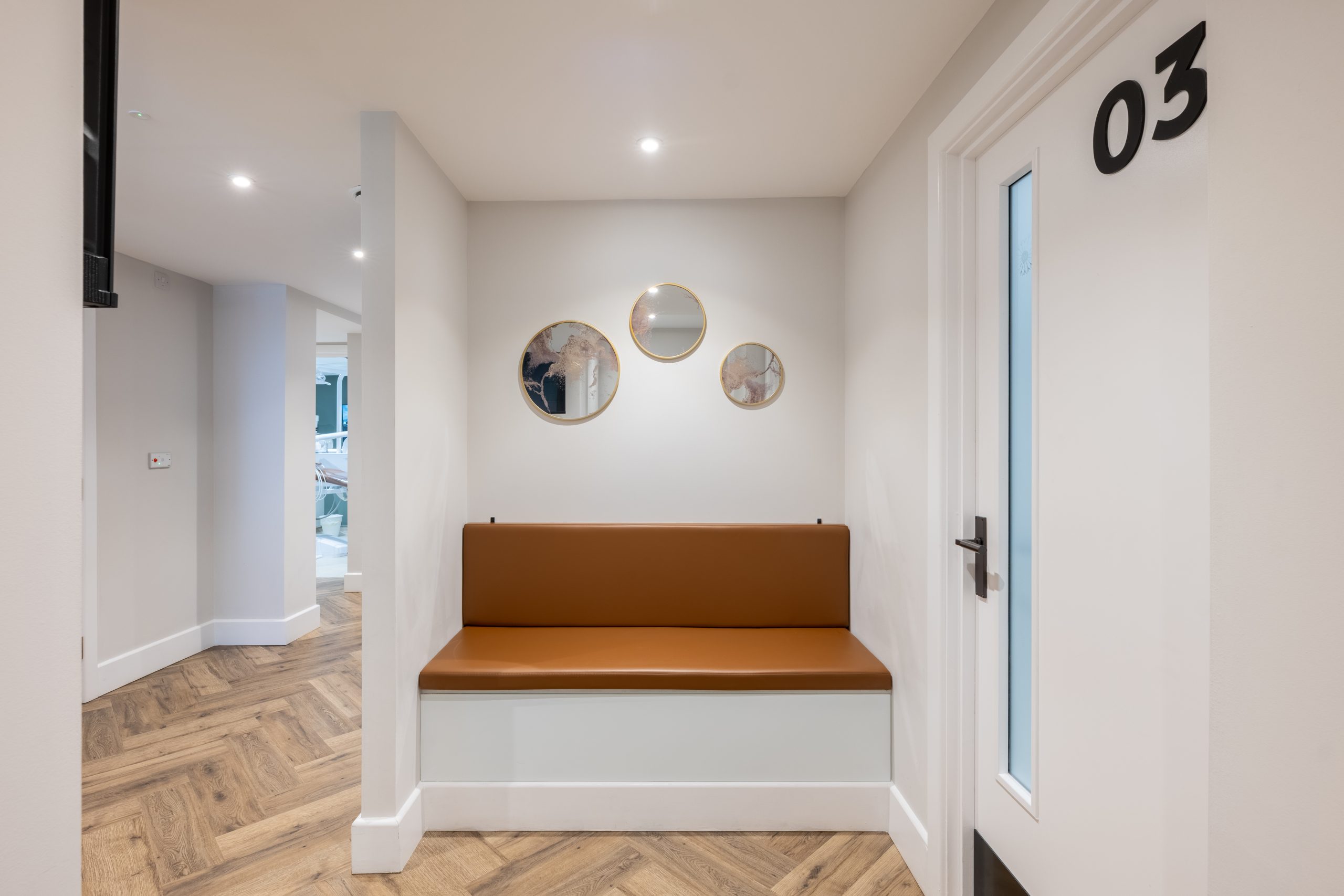
Colours can influence mood. Soft, muted tones like pale blues, greens and neutrals are calming for both humans and animals. Avoid harsh or bright colours that might feel stimulating or overwhelming.
Additionally, choose materials wisely:
- Non-slip flooring: Prevents accidents and reduces anxiety in pets who are hesitant to walk.
- Sound-absorbing surfaces: Cushioned anti-slip flooring, acoustic panels and soft furnishings can reduce echoing noises, which can frighten sensitive animals.
3. Reduce Noise and Unpleasant Smells
Veterinary practices can be noisy and full of unfamiliar scents.
To reduce stress:
- Proper ventilation: Good airflow and odour management are essential for a comfortable environment.
- Soundproof walls and doors: Minimise barking or meowing from reaching waiting areas.
- White noise machines or calming music: Gentle classical music or specially designed pet relaxation music can help soothe anxious animals.
4. Pet-Friendly Waiting Areas
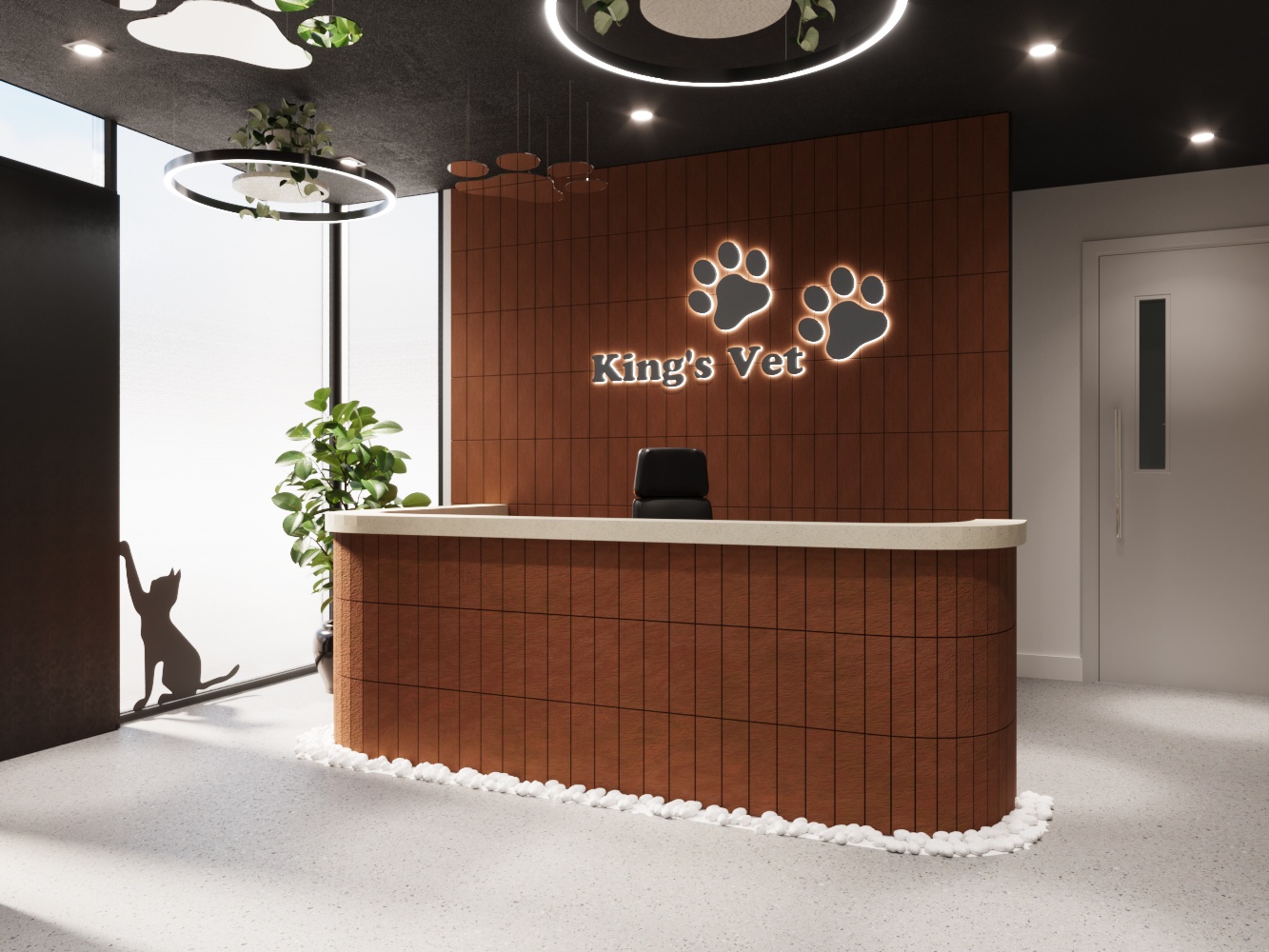
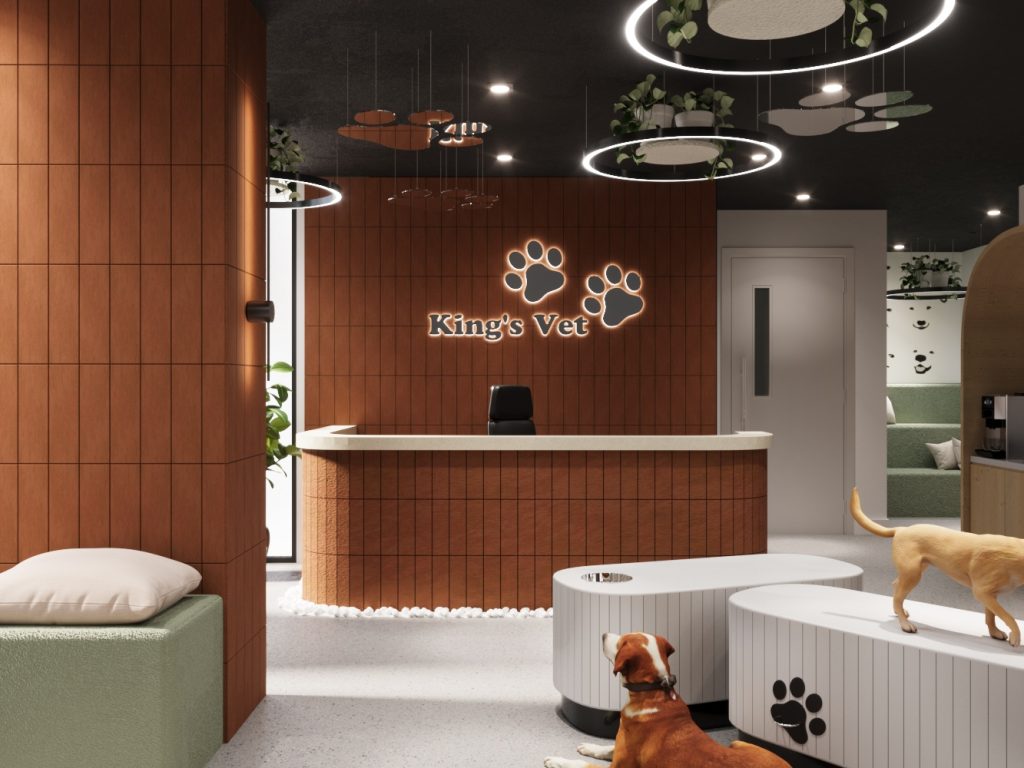
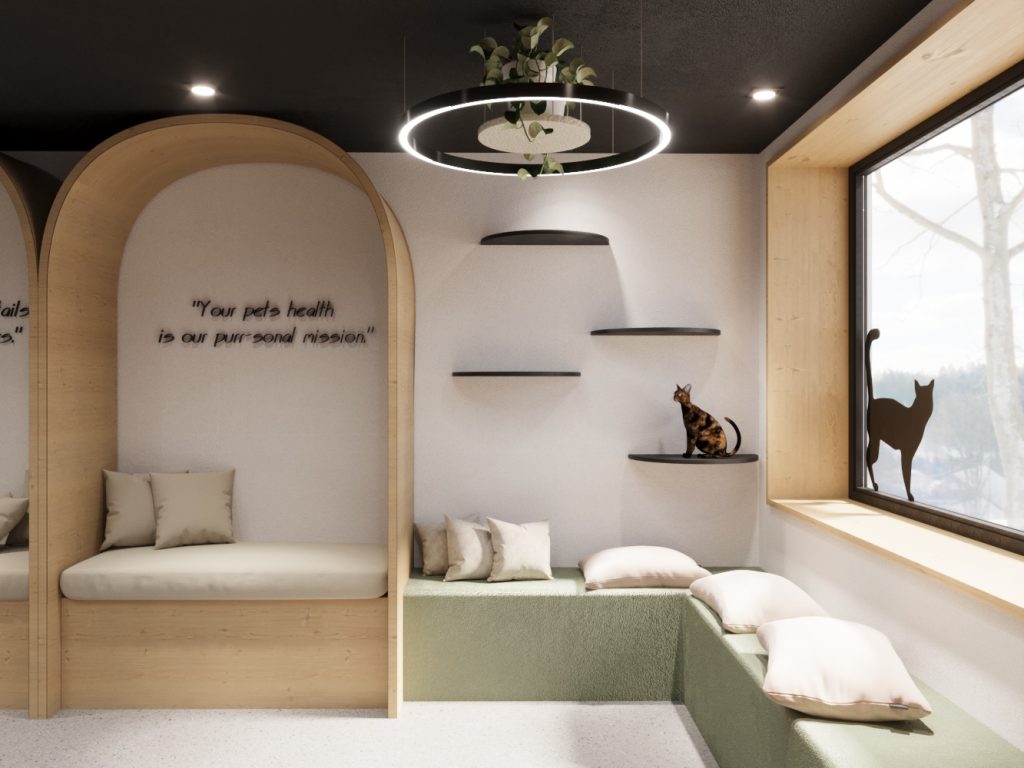
The waiting room is often where pets experience the most stress. Small touches like calming visuals or toys can make a difference.
Consider:
- Separate seating areas: Give space between clients with pets.
- Elevated cat carriers or small feline-only rooms: Cats feel safer off the ground.
- Comfortable seating for owners: Soft, spacious chairs encourage calm.
- Visual barriers: Screens or partitions reduce direct sight lines for anxious animals.
5. Stress-Free Examination and Treatment Experience
- Non-slip mats and pet ramps: Pets are more relaxed when they feel secure.
- Soft lighting: Bright overhead lights can be intimidating; adjustable or natural lighting works best.
- Calm handling areas: Keep exam rooms uncluttered, with space for gentle restraint or comfort items like blankets.
- Staff training: gentle, confident handling combined with low-stress techniques reinforces the calm environment.
6. Positive Distractions
- Interactive toys and puzzles: Can help keep pets engaged while waiting.
- Visual stimulation: Windows or aquariums provide a calming focal point.
- Treat stations or calming pheromones: Safe treats or diffusers can help reduce anxiety.
7. Cleanliness
A clean clinic is essential, but overuse of strong cleaning chemicals can irritate pets. Use pet-safe disinfectants and maintain a hygienic yet welcoming environment.
8. Listen to Your Clients and Staff
Finally, the best stress-free clinic designs incorporate feedback:
- Ask clients about what makes visits easier or harder for their pets.
- Observe staff workflow to ensure efficiency and reduce stress on both sides.
- Regularly update the layout or procedures based on real-world observations.
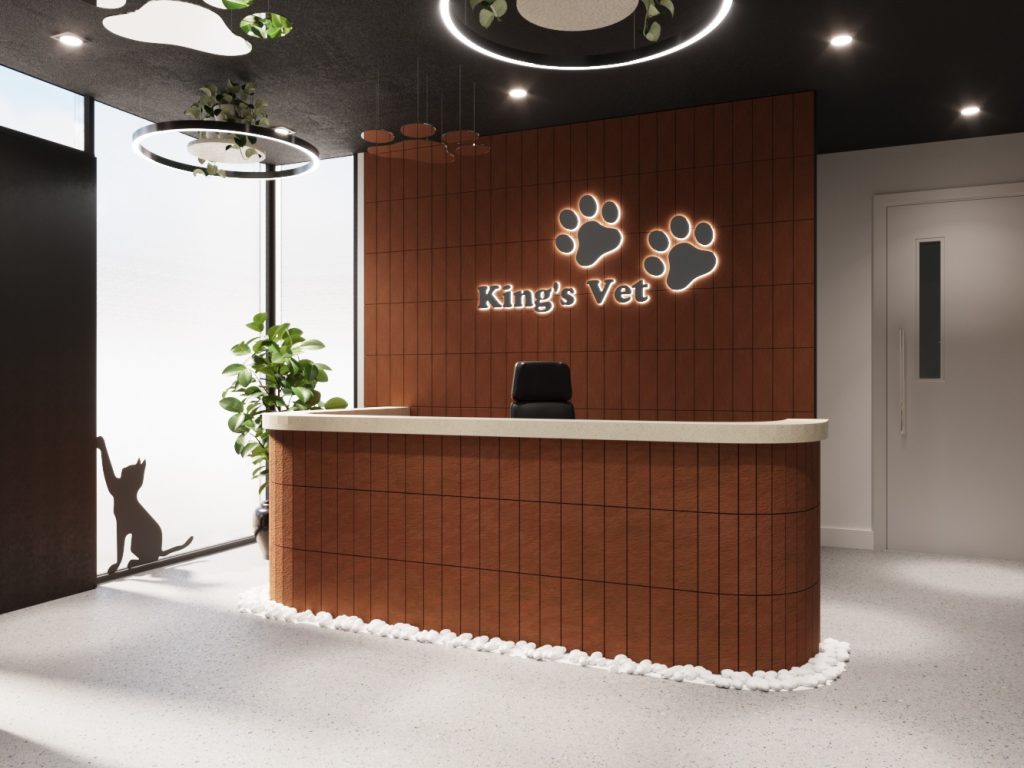
A stress-free veterinary practice is more than aesthetics, it’s about creating an environment that respects the needs of pets, their owners and the staff. Thoughtful design, calming colours, layout and attention to sensory details can transform stressful visits into positive experiences.
When pets feel safe and calm, veterinary care becomes smoother, more efficient and far more rewarding for everyone involved.